One Last Stella
A farewell to an old friend, a full church, and the quiet example of a truly kind man.
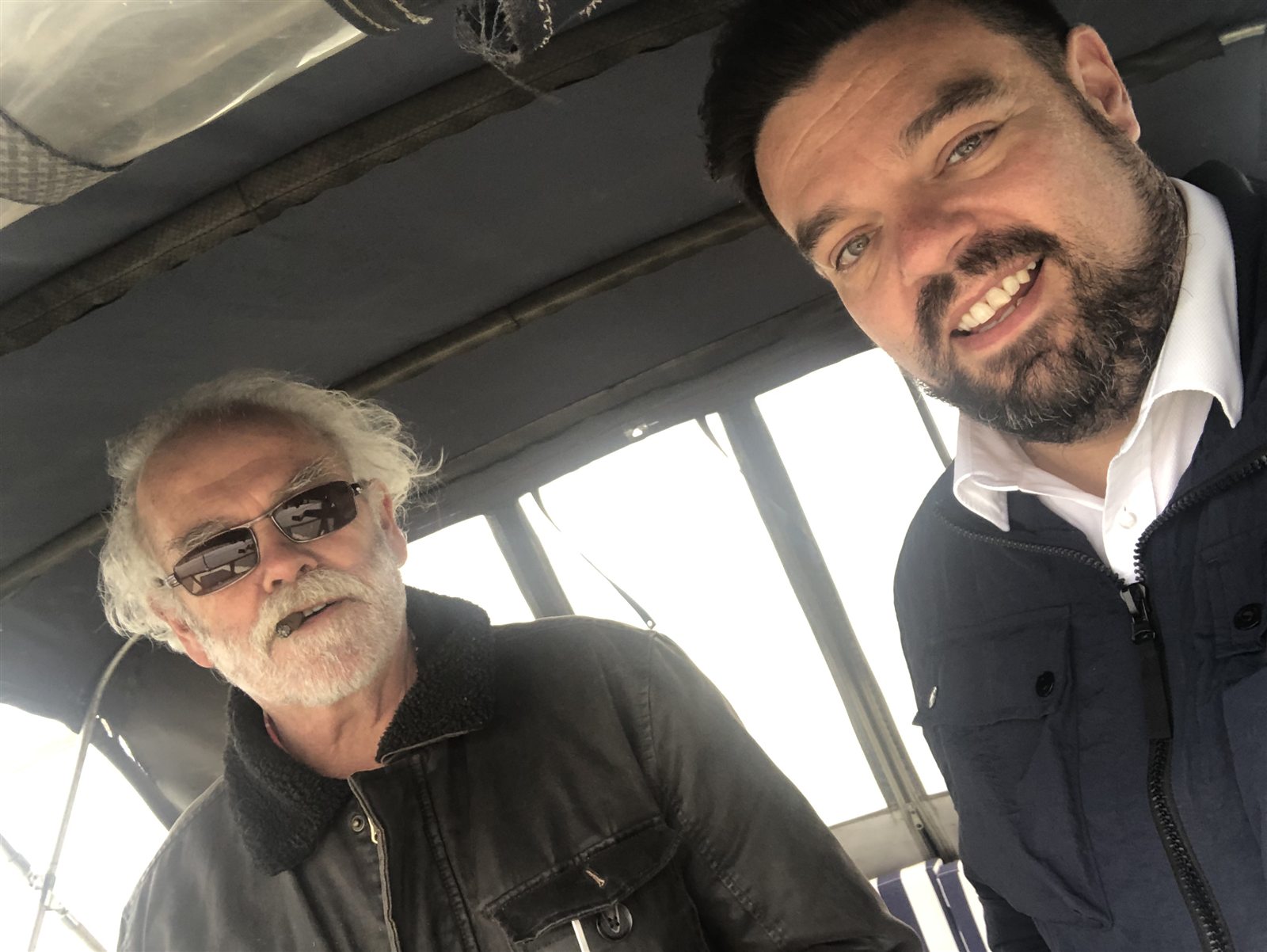
I went to a funeral yesterday.
I went alone.
Not because I am alone.
That feels important to say.
My wife would have come with me. She would have stood beside me, held my hand if I needed it, found the right quiet thing to say afterwards. But she lost her own father a few days ago, and I could not ask her to walk into another church, another grief, another room full of people trying to hold themselves together.
There are times when support becomes something you accept.
There are times when love means not asking.
So I went alone.
And I think, in its own small way, that took courage.
Not dramatic courage. Not the kind anyone claps for. Just the ordinary sort where you put on a suit, get in the car, and take yourself somewhere you know will hurt because the person mattered enough to deserve your presence.
Julian mattered.
I adored him.
That is not a word I use casually. But it fits him.
He was one of those people who seemed to carry life with him. Not loudly. Not by dominating a place. More by making the world feel slightly better arranged when he was in it. He had warmth without performance. Kindness without weakness. Good humour without cruelty. Presence without the need to announce himself.
The church was full.
More than full, really.
Over two hundred people from all the different corners of his life. Some I knew. Some I vaguely recognised. Some I had never heard of. Some were long-term neighbours who had come simply to pay respect to one of their own.
That moved me.
There is something deeply telling about who turns up when someone dies.
Not in a judgmental way. Grief is complicated, distance is complicated, life is complicated. But still, when a church fills like that, it says something.
It says a life reached people.
It says someone did not merely pass through.
It says the ordinary days counted.
The cups of tea. The conversations over fences. The kindnesses nobody wrote down. The little acts of decency that seemed too small at the time to become part of the evidence.
And then Lizzie stood up.
His wife.
She read his eulogy.
I do not know how people do that.
I really do not.
She is an actress, and perhaps that gave her some command of a room, some understanding of breath and timing and how to stand in front of people while feeling something enormous. But no training can make that easy. No professional experience removes the fact that she was standing there under the weight of losing her soulmate.
And she did not merely read.
She sang him from the rooftops.
Not literally, although it almost felt like that.
She gave him back to everyone in the church. Not as a saint. Not as some polished funeral version of a man. As Julian. Full of life. Funny. Kind. Loved. Missed before the service had even finished.
There was bravery in it.
Not the hard kind.
The open kind.
The kind that risks breaking in front of people because love has decided it would rather speak than stay safe.
She did him proud.
More than proud.
She honoured him.
Julian was the kindest soul.
That sounds like something people say after a death, because after death language often reaches for its softest clothes. But with him, it was true.
He put others before himself.
He showed people respect.
He did not seem to carry that ugly appetite some people have for finding the worst in others. I never once heard him have a bad word to say about anyone.
That is rare.
Rarer than we admit.
Most of us like to think of ourselves as decent, and perhaps most of us are, in patches. But sustained kindness is something else. To move through life without sharpening yourself on other people’s flaws, without turning every annoyance into a verdict, without needing to reduce someone else in order to feel steadier in yourself, that takes a kind of discipline I am not sure we talk about enough.
I found myself wondering how a person becomes that way.
How do you become someone whose goodness feels practised but not forced?
How do you become gentle without becoming passive?
How do you become generous without needing applause?
How do you become the sort of man people speak about with such uncomplicated affection?
I do not know.
I know I am not there.
I know there are parts of me still too quick, too defensive, too ready to turn hurt into a line, irritation into judgement, fear into volume.
And I know this piece is not about me.
That matters too.
A funeral is not a mirror first.
It is a farewell.
But if someone’s life makes you look at your own with a little more honesty, perhaps that is part of what love leaves behind.
Not guilt.
Not performance.
An invitation.
Julian had cancer.
I have written about cancer many times. In poems, in imagined voices, in stories where illness changes the furniture of a life and makes time suddenly visible.
But writing about it and watching someone carry it are different things.
Julian fought.
He smiled.
He showed it the contempt it deserved.
That phrase feels right to me.
He did not let cancer become the whole story. He did not give it the dignity of becoming his identity. He lived, still. Loved, still. Gave, still. Made people feel better, still.
That is not to romanticise suffering.
There is nothing romantic about cancer.
It is brutal, unfair and rude in the way only illness can be rude, barging into lives that were already full of unfinished things.
But there was something extraordinary in the way Julian remained Julian.
His children, his step-children and his grandchildren lucked out with him.
As a role model.
As a father.
As a grandfather.
As a friend.
Not everyone gets that.
Not everyone gets to be loved by someone whose presence teaches without lecturing. Someone whose decency gives others a standard, not by demanding it, but by quietly living near it.
I had known him for over twenty-five years.
A dear old friend.
That phrase carries more weight the older you get. When you are young, twenty-five years sounds almost abstract. Later, it becomes a landscape. A quarter of a century of conversations, changes, shared faces, altered lives, illnesses, children growing, people ageing, the world becoming less like the one you first met in.
And then, suddenly, you are standing by a grave.
Alone.
After the service, after the words, after the people had begun to move away into their own afternoons, I had one last can of Stella with him.
He loved Stella.
So I stood there by his grave, alone, and drank it.
That is the sort of ritual that might sound strange if you explain it too much.
So I will not.
It was not grand.
It was not theatrical.
It was a can of lager, a grave, and a man saying goodbye to his friend.
Sometimes that is all a ceremony needs to be.
I thought about Lizzie.
I thought about his family.
I thought about the church full of people.
I thought about how many different versions of one man had gathered there, each person carrying their own Julian, each memory incomplete, each one true.
And I thought about the kind of person I would like to become.
Not in some sudden, dramatic way.
No clean transformation.
No convenient redemption arc.
Just the long work of becoming less sharp where kindness would do.
Less noisy where gentleness is needed.
Less eager to judge.
More willing to assume the best.
More able to make people feel respected, even in passing.
That is a long journey.
I know that.
But standing there yesterday, it seemed like one worth making.
For now, though, this is not about self-improvement.
It is about saying goodbye.
So goodbye, Julian.
Thank you for the warmth.
Thank you for the example.
Thank you for showing that kindness does not need to announce itself to change the temperature of a life.
I will miss you.
And I hope, in whatever way hope is allowed to work after death, that we get to catch up again someday.
I’ll bring the Stella.
Comments
Leave a note below. Just add your name, no account needed.